APPLICATION MATRIX
A packaging line, water plant, material-handling system, and building utility plant may share PLC hardware vocabulary while imposing very different I/O, availability, environment, and maintenance constraints.

Record axis interfaces, safety ownership, high-speed signals, standard option modules, recipe storage, and the service skills available at the customer site. A compact centralized rack simplifies a stable machine, while distributed I/O can reduce field cable runs and isolate modular stations. The trade-off is additional network design, device configuration, and fault localization work.
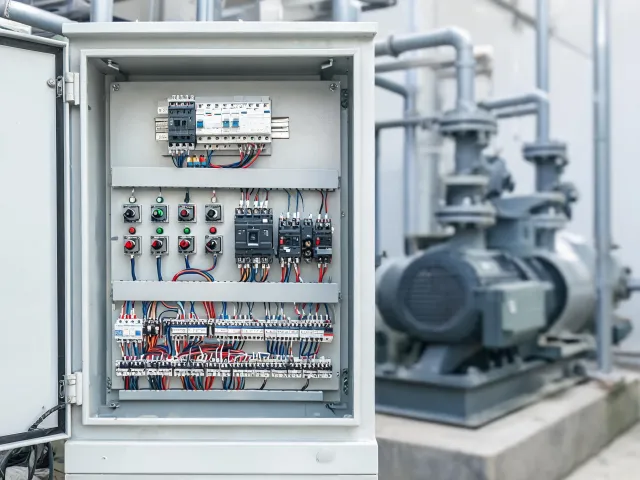
Pump sequencing, analog instrumentation, remote stations, telemetry, manual override, and alarm behavior shape the control plan. Conservative derating can improve margin in warm enclosures but requires more panel space and budget. Higher utilization reduces initial footprint yet leaves less tolerance for temperature, loading, and later expansion.
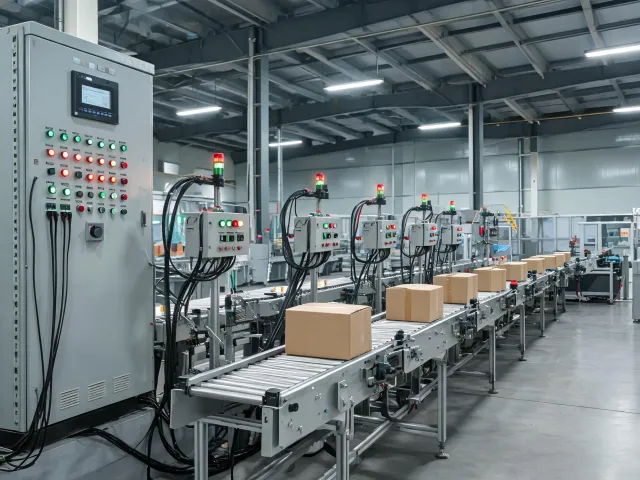
Conveyor zones require defined restart behavior, jam detection, upstream and downstream handshakes, drive control, and maintenance isolation. Centralized control provides a single logic and data authority; distributed control can improve local autonomy and fault isolation. Neither architecture is universally preferable without distance, latency, downtime, and service criteria.
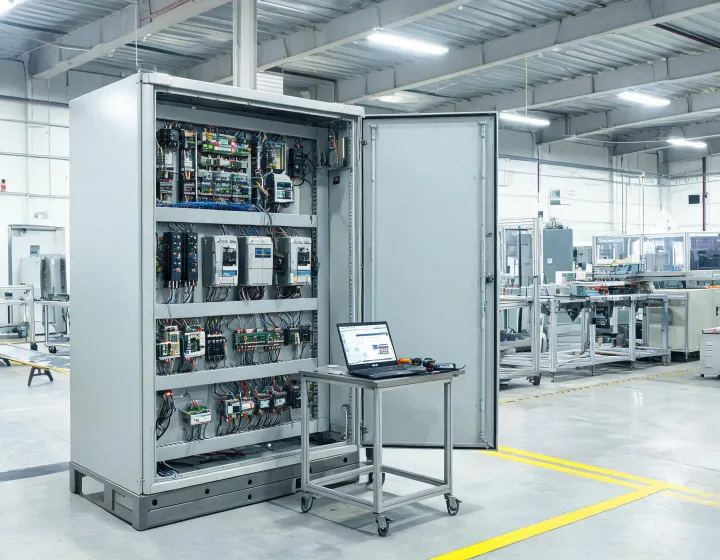
Background: a multi-station machine needs local signal collection and a common supervisory sequence. Process: the review maps 128 digital points, 16 analog channels, station boundaries, PROFINET devices, safety ownership, and a 20% documented expansion allowance. Result: the bill of material can be checked against cabinet width, network nodes, and power demand before panel release. These figures are a selection scenario, not a claim about a named installation.

Background: an unattended station requires local sequencing and remote status. Process: the design record defines analog scaling, loss-of-communications behavior, surge environment, enclosure IP requirement, power recovery sequence, and manual operating mode. Result: controller and communication choices remain traceable to a functional requirement instead of a preferred part number. Site protection coordination and final certification still require project engineering.
Share the process narrative, I/O schedule, network diagram, electrical environment, and maintenance constraints.
Talk to an EngineerProvide exact part references and state which substitutions, accessories, and compliance documents are acceptable.
Request a Quote