QUICK SELECT
Abb Plc choices narrowed by four inputs
Start with voltage, current and signal conditions, installation, and applicable documentation—not a remembered model name.
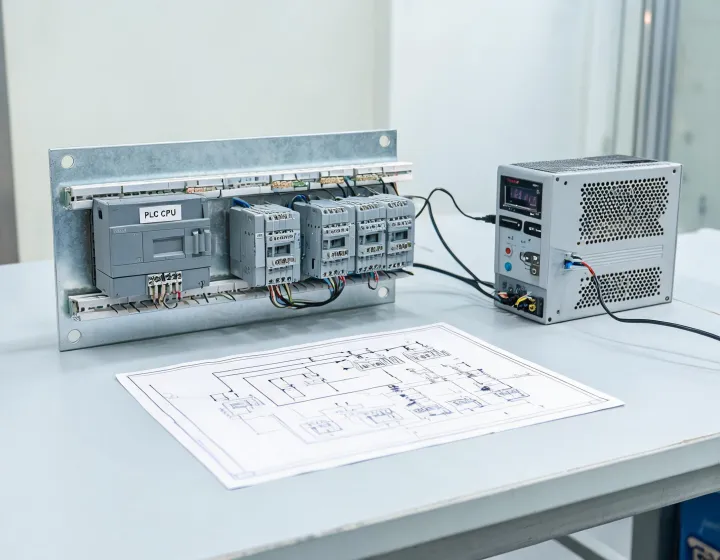
QUICK SELECT
Start with voltage, current and signal conditions, installation, and applicable documentation—not a remembered model name.
Four known inputs remove most unsuitable paths before a quote is requested.
Record controller supply, digital input logic, output load interface, analog signal type, isolation expectations, and the panel’s available 24 V DC capacity. Rated current for field loads belongs in the interface design; it should not be inferred from the controller name. Then add ambient temperature, altitude, vibration, contamination, and enclosure IP or NEMA requirements. These conditions can impose spacing or derating limits.
Count local and remote points separately, identify scan-sensitive operations, estimate memory and data retention needs, and reserve expansion explicitly. Name every required protocol and device role. PROFINET, EtherNet/IP, and Modbus TCP are not interchangeable simply because they share Ethernet cabling; engineering files, diagnostics, timing, topology, and third-party compatibility differ.

CPU, I/O, terminal, communication, power, and mounting accessories listed without hidden assumptions.
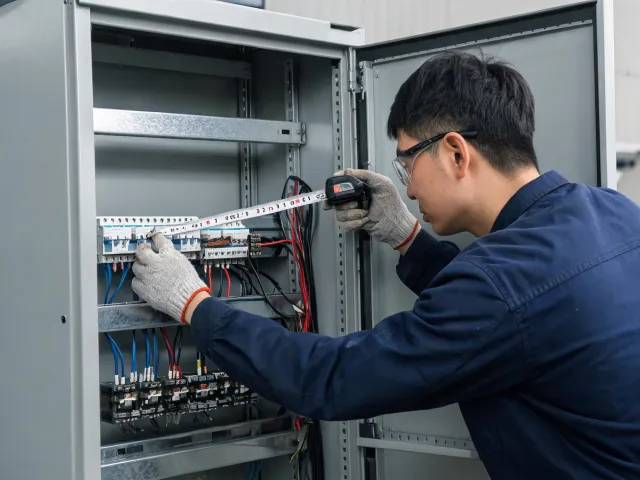
Drawings show width, spacing, power distribution, grounding, cable routing, and service access.
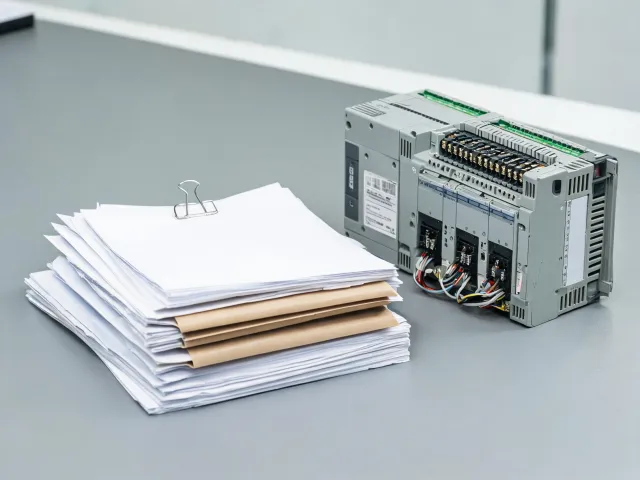
IEC, UL, CE, or RoHS evidence is checked only where the exact series and destination require it.
| Parameter | Selection record | Verification source |
|---|---|---|
| Supply and I/O | V DC, signal type, load interface | Series datasheet and wiring guide |
| Network | Protocol, role, topology, node count | Compatibility list and device files |
| Environment | Temperature, IP/NEMA, altitude | Installation instructions |
The response will separate confirmed compatibility, open engineering decisions, and documentation still needed for the destination market.